Article Highlights
- Australian Standards set specific clear opening requirements for wheelchair accessible doorways that ensure smooth passage and manoeuvrability
- Door style choices like sliding doors and automatic openers can make wheelchair access easier while suiting Perth’s climate
- Hardware positioning, threshold design, and door operation force are just as important as width when creating truly accessible spaces
- Frequently Asked Questions
There are doors of many shapes and sizes, but also functionalities. It’s important to consider everyone’s needs when it comes to accessibility.
Making your home or business wheelchair accessible isn’t just about ticking boxes. If you’re planning a renovation or new build in Perth and across WA, understanding wheelchair accessible door width requirements is one of the first steps to getting it right.
Why Door Width Matters for Wheelchair Users
Getting the wheelchair accessible door width right makes all the difference between a space that works and one that feels restrictive. Too narrow, and you’re stuck with awkward angles and scraped knuckles every time you pass through.
The right width gives you breathing room to enter and exit smoothly without constantly worrying about catching the frame or your wheels.
A person sitting in a wheelchair needs enough clearance not just for the chair itself but also for their hands on the wheels, any mobility aid attachments, and the natural side-to-side movement that happens when you’re navigating doorways.
For homes receiving NDIS funding or commercial buildings that need to comply with accessibility requirements, getting these dimensions sorted from the start saves you from costly retrofits down the track.
What Australian Standards Say About Accessible Doorways
Australian Standards provide clear guidance on what constitutes a wheelchair accessible door. The key document, AS 1428.1, outlines the minimum unobstructed width needed for doorways on a continuous accessible path.
While we won’t throw exact numbers at you, the standard ensures that everyday wheelchairs can pass through comfortably with room to spare.
Homes vs Commercial Buildings
The approach differs slightly depending on whether you’re working on a residential property or a commercial premises. For new buildings, particularly homes, industry guidelines guide designers toward doorways that accommodate wheelchair users throughout the property.
Commercial buildings and healthcare facilities have stricter compliance requirements. Every access door on a public path needs to meet the standard, and double doors must provide adequate clearance through the active leaf alone.
Bathroom accessibility deserves special attention. A wheelchair accessible bathroom door width needs to account for the tighter turning circles and limited space inside these rooms. Many designers opt for slightly more generous openings than the bare minimum to make daily use less fiddly.
Popular Door Styles That Tick the Accessibility Box
Choosing the right door type can make wheelchair access feel effortless rather than awkward. Here’s what works well in Perth homes and businesses.
Sliding Doors
Sliding doors are brilliant for accessibility. They remove the whole issue of door swing, which can be a real headache when you’re trying to manoeuvre a wheelchair in tight spaces. You get a wide, clear opening without needing extra floor space to accommodate the arc of a swinging door.
In Perth’s climate, aluminium sliding doors are a favourite. They’re durable, low maintenance, and can span large openings, which naturally makes them accessibility-friendly. Cavity sliders work beautifully in ensuites and bathrooms where space is at a premium.
Wide-Opening French and Bi-fold Options
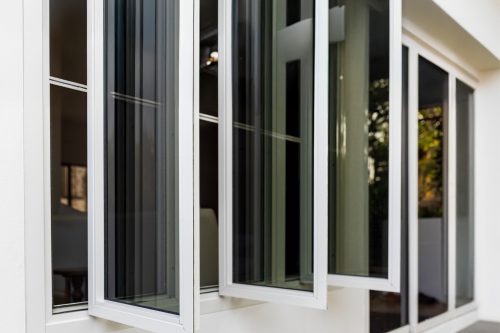
French doors can provide generous openings when both panels are opened. They suit heritage-style homes and add a touch of elegance while still meeting accessibility standards. Bi-fold doors take this concept further, folding neatly to one side and creating an almost seamless transition between indoor and outdoor areas.
Automatic Swing Doors
For commercial buildings and healthcare settings, automatic swing doors have become increasingly popular. They eliminate the physical effort needed to open heavy doors and make access easier for everyone, not just wheelchair users. Since the pandemic, touch-free automatic doors have been requested more often in retail and office spaces too.
Hardware and Threshold Touch-Points
A wheelchair accessible door is more than just the door itself.
Door handles need to sit at a height that’s comfortable for a person sitting down and be operable with one hand without requiring a tight grip. Lever handles generally work better than round knobs.
Thresholds are another critical consideration. Even a small lip at the doorway can become an obstruction for wheelchair users. Any change in floor level needs to be minimal, and if there’s a step, you’ll need threshold ramps with a gentle gradient to comply with AS 1428.1.
Door closers can make doors heavy to push open. If you’re installing a closer, check that the force required to open the door stays within acceptable limits. Sometimes an automatic opener or hold-open device is the better solution.
The space around the door matters too. You need adequate room beside the handle so a wheelchair user can position themselves to pull the door open without getting stuck in the swing arc. Hinge-side access needs extra clearance to reach the latch comfortably.
Retrofitting Tips for Perth Homeowners
If you’re retrofitting an older Perth home for wheelchair accessibility, you’ve got a few options. Sometimes you can widen existing doorways by removing the frame and installing a broader one. Other times, switching from a swing door to a slider is the smarter move, particularly in hallways and bathrooms where space is tight.
Trimming down thresholds or installing low-profile threshold ramps can make a noticeable difference without major structural work. Upgrading door handles to lever-style options is a simple change that improves accessibility for everyone in the household, not just wheelchair users.
Perth Window and Door works with homeowners and NDIS participants across WA to find practical solutions that suit your property and budget. Our team understands the local building requirements and can guide you through the process from initial consultation to installation.
Ready to Make Your Space More Accessible?
If you’re planning a new build, renovating an existing property, or need to retrofit for accessibility, getting your doorways right makes all the difference.
Our experienced team can help you choose the best door solutions for your Perth home or business, ensuring compliance with Australian Standards while creating spaces that work beautifully for everyone.
Visit our Malaga showroom or contact us today for a free consultation and quote.
FAQs
The national accessibility standard calls for a clear, unobstructed opening that easily accommodates the bulk of everyday wheelchairs.
This applies to any doorway on a continuous accessible path, whether it's in your home or a commercial building. The measurement refers to the actual clear space when the door is fully open, not the door frame width.
You can make a door wheelchair accessible by widening the doorway, replacing the frame with a broader one, or switching to a space-saving slider. Lower or upgrade handles to lever-style options that are easy to operate from a seated position.
Trim thresholds to remove any lips or steps, and if the door is heavy, consider automating it or adjusting the door closer to reduce the force needed to open it.
Most everyday wheelchairs in Australia are narrower than the mandatory doorway clearance required by accessibility standards. The standards deliberately leave generous breathing space to make manoeuvring through doorways far less fiddly.
This extra room accounts for the user's hands on the wheels, any attachments, and the natural side-to-side movement that happens when navigating tight spaces.