Choosing new windows for your Perth home shouldn’t feel like guesswork. You want something that works well in our climate, fits your budget, and looks right for your space. We’ve been helping Perth families pick the right windows since 1983, so we know the questions that come up most often.
Which window types offer superior ventilation and more fresh air? Which openable window style keeps the rain out when you forget to close it? Which one gives you improved energy efficiency without blowing the budget?
This guide breaks down the key differences between awning and sliding windows, so you can make a confident choice for your home or renovation project.
What is an Awning Window?
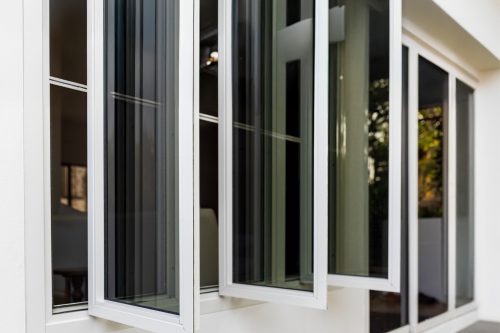
An awning window is hinged at the top and opens outward from the bottom, usually operated with a crank handle or chain winder. When you turn the handle, the sash tilts out, creating a canopy effect. That’s where the name comes from; the open window acts like a small awning over the opening.
This window design is clever because it lets you leave the window partially open even during light rain. The glass sits at an angle that sheds water away from the interior, so you get natural ventilation without worrying about puddles on your sill.
We often install awning windows above kitchen sinks, in bathrooms for privacy, or high on walls where you still want airflow but don’t need a view at eye level. They also suit a range of other architectural styles, and work particularly well on high floors.
Pros of Awning Windows
Awning windows provide several advantages that make them popular for Perth homes:
- Ventilation in any weather. The outward tilt funnels breezes upward and keeps rain outside, helping improve airflow and air circulation.
- Energy-efficient operation. Less air leakage means your air conditioner doesn’t work as hard in summer, and your heater retains warmth in winter.
- Security when vented. The sash opens outward, and the hardware sits inside; it’s harder for someone to tamper with.
- Easy operation from any height. A simple mechanism and crank handle mean you don’t need to reach or strain.
Cons of Awning Windows
No window design is perfect for every situation, and awning windows have a few limitations:
- More space is needed. The sash swings outward, so you need clear space outside.
- Higher upfront cost. The crank mechanism and dual-seal system add to the price compared to basic sliding windows.
- Cleaning the outside pane. On a two-storey home, reaching the exterior glass can be tricky.
- Limited opening width. Because the sash tilts out rather than sliding fully aside, the maximum opening area is smaller than that of a wide sliding window.
What Is a Sliding Window?
Sliding windows feature sashes that glide horizontally along tracks within the frame. One or both panels can slide, depending on the configuration you choose. There’s no cranking or hinging; you simply push the sash to the side, and it rolls smoothly on the track.
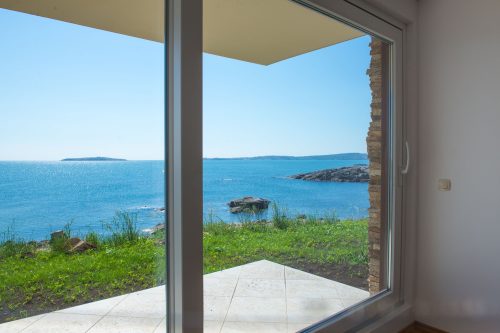
This straightforward window design has made sliding windows the first choice for many Perth homeowners. They’re cost-effective, versatile, and work brilliantly in wide horizontal openings where you want unobstructed views and plenty of natural light. They are also considered ideal windows for maximising wide openings and space-saving properties in rooms with limited space.
Pros of Sliding Windows
Sliding windows offer practical benefits that suit a wide range of Perth homes:
- Unobstructed views. When you slide the sash fully open, you get a clear, wide opening with no frame or hinge in the way.
- Space-saving design. Because the sash moves within the frame rather than projecting outward, sliding windows work perfectly in tight spots.
- Low maintenance. Fewer moving parts mean less to service.
- Budget-friendly. Sliding windows generally cost less per square metre than awning or casement windows.
- Large opening area. A sliding window can span a wide horizontal space and still open fully to one side, offering excellent airflow and natural ventilation.
Cons of Sliding Windows
Sliding windows aren’t perfect for every scenario. Here are a few trade-offs to consider:
- Must close in the rain. Unlike awning windows, sliders don’t have that protective canopy effect.
- Track maintenance. Dirt, leaves, and dust collect in the bottom track over time.
- Seal degradation. The weather-strips that sit along the tracks can wear out faster than the compression seals on awning windows, reducing insulation over time.
- Security perception. Some people worry that sliding windows are easier to force open from the outside.
Awning Windows vs Sliding Windows: Side-by-Side Comparison
Here’s a quick table to see how these two window styles stack up in everyday use:
|
Factor |
Awning Windows |
Sliding Windows |
|---|---|---|
| Operation | Crank handle; sash opens outward from the bottom. | Slide horizontally within the frame. |
| Ventilation | Funnels breeze upward; they can be left open during showers. | Large opening area for cross-flow; must close when it rains. |
| Energy & Acoustic Seal | A tight seal and compression seal around the full sash for minimal air leakage. | Weather-strips on tracks can degrade over time. |
| Space Considerations | Needs exterior clearance (garden beds, walkways). | No projection, perfect near decks or narrow paths. |
| Maintenance | Annual hinge/winder lube; the outer pane on a two-storey may need a ladder. | Keep tracks clear; sashes lift out for easy cleaning. |
| Cost | Hardware adds roughly 10 to 20% to the price, but offers improved energy efficiency. | Sliding windows are more affordable upfront. |
Which One Wins for Your Space?
There’s no clear winner between awning windows and sliding windows, because the right choice depends on your specific needs. Think about where the window will be installed, how you plan to use it, and what matters most to you in terms of performance.
Choose awning windows if:
- You want ventilation even during Perth’s rainy weather.
- Energy efficiency, superior sealing, and better insulation are high priorities.
- The window will be installed high on a wall or above a fixture like a sink.
- You live near a busy road and want better noise control.
- You’re building or renovating to meet stricter energy-rating requirements.
Choose sliding windows if:
- You need a wide horizontal opening with unobstructed views.
- The window sits close to a deck, patio, or narrow walkway.
- You’re working within a tighter budget and want great value.
- You prefer easy maintenance with minimal moving parts.
- You want large opening areas for maximum air flow and air circulation on calm days.
In many Perth homes, you’ll see a mix of both styles. Awning windows in bathrooms and kitchens, sliding windows in living areas and bedrooms. That’s a smart approach because it lets you match the window styles to the room’s function and layout.
Finding the Right Window Design for Your Perth Home
We’ve been helping Perth families navigate these decisions since 1983, and we know that every home is different. Sometimes the best answer comes from seeing new windows in person, testing the mechanisms, and talking through your specific situation with someone who understands local conditions.
Ready to choose between awning windows and sliding windows for your Perth home? Call us on 08 9249 2099 for honest advice, or visit our showroom to see the full range of window styles in person.