Article Highlights
- WA’s Region D retains the nation’s highest design wind speeds at 317 km/h under state building variations, making proper cyclone-rated products essential for northern coastal properties
- Cyclone-rated bifold doors and access doors may be built to Australian standards
- Properties with compliant cyclone-rated doors and windows may qualify for lower insurance premiums.
Western Australia sees an average of 4 to 5 tropical cyclones cross its coast each season. If you’re building or renovating in one of WA’s cyclone-prone regions, choosing cyclone-rated doors and windows isn’t just about ticking a compliance box. It’s about protecting your home, your family, and your investment against some of the most powerful forces nature can throw at a building.
Perth Window & Door specialises in installing Invisi-Gard security screens, which are designed to withstand the force of windborne items under cyclone conditions and resist knife and impact attack. The Invisi-Maxx screens have been developed and tested to both meet and exceed Australian Standards.
At Perth Window & Door Replacement Company, we’ve spent nearly 40 years helping Perth homeowners and builders across WA select windows and doors that stand up to cyclone conditions. Here’s what you need to know about cyclone-rated doors and windows in Western Australia.
Watch:
Cyclonic Impact Testing – Invisi-Maxx Security Screen
Understanding WA’s cyclone wind regions
In Western Australia, Wind Regions C and D cover the northern and coastal areas prone to severe tropical cyclones, with Region C covering the Northwest and Region D covering severe coastal areas. These zones necessitate specialised building standards (AS/NZS 1170.2) to withstand wind speeds up to 220 km/h (C) and 260 km/h (D).
Western Australia is divided into distinct cyclonic wind regions under AS/NZS 1170.2, and knowing which one applies to your property determines what level of protection you need.
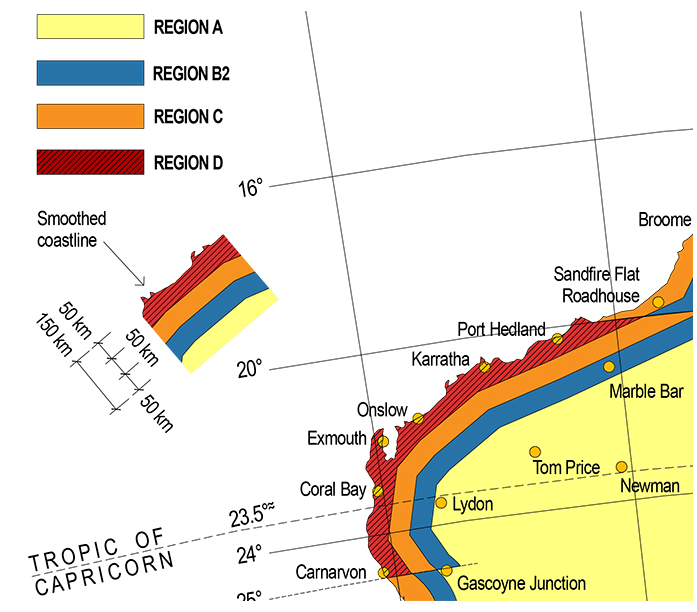
WA Wind Region Map – National Construction Code (NCC)
Region C covers the coastal band from Exmouth down to Broome, with design wind speeds around 61 metres per second (roughly 220 km/h). Properties here need products rated to withstand significant wind forces and debris impact.
Region D is where things get serious. This 50-kilometre coastal strip running from Port Hedland to Carnarvon faces the highest design wind speeds in Australia at 88 metres per second, or 317 km/h.
What does this mean for you? If you’re building in Port Hedland, Karratha, Dampier, or similar northern towns, your cyclone-rated windows and doors must meet C4 certification requirements. It’s not optional, and for good reason. After Cyclone Narelle hit in March 2026, around 1,800 insurance claims were lodged in WA.
The Shire of Broome notes that Building Code minimums only cover up to Category 3 cyclones. Many homeowners choose to specify higher ratings for added protection, which brings peace of mind and potential insurance benefits.
NCC 2022 and AS 2047 compliance essentials
The National Construction Code 2022 sets the baseline for cyclone resistance in WA, but there’s more to compliance than just buying a product with a rating sticker.
Your cyclone-rated doors and windows need to meet AS 2047 testing standards for structural adequacy and weatherproofing. This includes cyclic loading tests (AS 4040.2) that simulate repeated wind gusts, and debris impact testing (AS 4040.3) where products face 4-kilogram timber projectiles travelling at 15 metres per second.
The testing certifications should come from your supplier, and we always recommend keeping these documents with your building records. If you ever sell your property or make an insurance claim, you’ll need proof that your openings meet code requirements.
Material choices for cyclone-rated products
Aluminium dominates the cyclone-rated market in WA, and there are solid reasons for that.
Powder-coated aluminium frames resist corrosion from coastal salt air whilst maintaining structural integrity under extreme wind loads.
The material won’t rot, warp or degrade the way timber can in our climate. Systems from manufacturers like Capral and Alspec now carry C1 through C4 ratings across their product ranges.
For secure cyclone-rated doors, aluminium offers the strength needed for multi-point locking systems. These locks engage at several points around the door frame, distributing wind pressure evenly and preventing the door from being forced open or blown in.
Cyclone-rated bifold doors and special applications
One question we hear often: can you have cyclone-rated bifold doors in an alfresco area?
The answer is yes, but you need the right product. Standard bifold systems won’t cut it in cyclone zones. You need bifolds engineered specifically for high wind loads, with reinforced stiles, heavy-duty hinges, and multi-point locking on each panel.
These systems typically achieve C3 ratings, which suits most of Region C. For Region D applications, you might need to look at stacking doors with fewer, larger panels that can be more easily reinforced.
The same principle applies to other specialty openings. French doors, sliding doors, and large glazed openings all need to meet the same wind rating as your standard windows. The bigger the opening, the more complex the engineering to maintain structural integrity.
Installation matters enormously with these products. Even a correctly rated door will fail if it’s not fixed properly to the structure. We use mechanical fixings appropriate for cyclone loads, and we follow manufacturer specifications exactly. This isn’t an area for shortcuts or “she’ll be right” attitudes.
Installation and certification requirements
Getting your cyclone-rated products signed off in WA means more than just buying certified products. The installation itself needs to meet code requirements.
Your installer should provide documentation showing that fixings, flashings, and sealing all comply with the wind rating. The Australian Glass and Window Association provides guidance on weatherproofing obligations under AS 2047.
For commercial projects and new builds, the building surveyor will want to see test certificates and installation records before signing off. Keep everything organised and readily available.
Maintenance before cyclone season
Cyclone-rated products need regular checks to maintain their performance.
Before each cyclone season, inspect weather seals around all doors and windows. These rubber or foam seals compress over time and need replacement every few years. Damaged seals let water penetrate during storms and reduce the structural performance of the opening.
Check all locking points on multi-point locks. They should engage smoothly and firmly. If a lock feels stiff or doesn’t fully engage, get it serviced. A partially engaged lock won’t hold during high winds.
Look at your glazing for any chips or cracks, particularly around the edges. Even small damage can compromise the integrity of laminated glass during impact events. Clean and lubricate hinges, rollers, and tracks. Coastal properties especially need this attention, as salt buildup accelerates wear.
Keep your certification documents and product specifications in a safe place. You might need them for insurance claims, building inspections, or property sales years down the track.
Making the right choice for your WA property
Choosing cyclone-rated doors and windows comes down to understanding your specific wind region, selecting products that meet or exceed those requirements, and ensuring proper installation by experienced teams who know WA conditions.
Properties in cyclone-prone areas simply need this level of protection. We work with homeowners, builders, and commercial clients across WA to specify and install tested cyclone-ready windows and doors that meet code requirements and suit individual needs.
Our nearly 40 years of experience in Perth’s harsh climate means we understand what works and what doesn’t.
If you’re planning a build or renovation in a cyclone zone, chat to one of our experts who will help you choose the right products for your location, budget, and design preferences.
FAQs
Cyclone-rated doors and windows are specifically engineered to withstand extreme weather conditions, including high winds and flying debris. Systems like Invisi-Maxx security screens use high-tensile marine-grade stainless steel mesh and heavy-duty frames designed to absorb and disperse impact energy, helping prevent debris from entering your home during a cyclone.
Cyclone-rated screens are independently tested to meet and exceed Australian Standards for cyclone regions (including the most severe Region D). For example, Invisi-Maxx screens have been tested to resist debris impacts travelling up to 44 m/sec, well above the required standard of 35.2 m/sec, demonstrating exceptional strength and durability.
Yes. The same features that make cyclone-rated screens strong, such as tightly woven stainless steel mesh, reinforced frames, and secure fixing systems, also provide high-level protection against forced entry. These systems are tested for impact resistance and knife-shear performance, offering both weather protection and enhanced home security.
No, high-quality cyclone-rated screens are designed to maintain comfort and aesthetics. Despite their strength, they allow natural light, airflow, and outward visibility, so you can enjoy fresh air and clear views without compromising safety or protection.